What are the 50 Phrasal Verbs with Meaning and Examples?
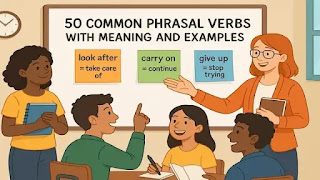
What are the 50 Phrasal Verbs with Meaning and Examples? If you're wondering What are the 50 Phrasal Verbs with Meaning and Examples? , you're in the right place Learning phrasal verbs is essential for mastering spoken English. Whether you're a beginner or intermediate learner, understanding how phrasal verbs work can dramatically improve your fluency and comprehension. In this comprehensive guide, you’ll learn 50 of the most useful phrasal verbs , complete with meanings, clear explanations, and real-life examples that make them easy to remember and use. What is a Phrasal Verb? A phrasal verb is made up of a regular verb followed by a preposition or adverb, and together they create a completely new meaning that’s often quite different from the original verb. “Give up” means to stop trying (not just “give”). The phrase " look after " goes beyond simply looking—it means taking care of someone or something and making sure they're okay. Why Are Phrasal Ve...
