Posts

Showing posts with the label Example of Modal Verb

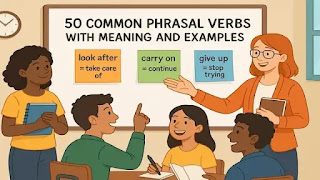
What are the 50 Phrasal Verbs with Meaning and Examples?
Image
What are the 50 Phrasal Verbs with Meaning and Examples? If you're wondering  What are the 50 Phrasal Verbs with Meaning and Examples? , you're in the right place Learning phrasal verbs is essential for mastering spoken English. Whether you're a beginner or intermediate learner, understanding how phrasal verbs work can dramatically improve your fluency and comprehension. In this comprehensive guide, you’ll learn 50 of the most useful phrasal verbs , complete with meanings, clear explanations, and real-life examples that make them easy to remember and use. What is a Phrasal Verb? A phrasal verb is made up of a regular verb followed by a preposition or adverb, and together they create a completely new meaning that’s often quite different from the original verb. “Give up” means to stop trying (not just “give”). The phrase " look after " goes beyond simply looking—it means taking care of someone or something and making sure they're okay. Why Are Phrasal Ve...

Example of Modal Verb

Image
Example of Modal Verb Example of Modal Verb Modal verbs are an essential part of English grammar, but they can be confusing if you’re not familiar with how they work. Whether you’re asking for permission, making a suggestion, or talking about possibilities, modal verbs help express various shades of meaning in your sentences. In this guide, we’ll break down modal verbs in a simple way, complete with examples to make it easy to understand and use them in daily conversations. What Are Modal Verbs? Modal verbs are special auxiliary verbs that help convey mood, ability, permission, possibility, or obligation. Unlike regular verbs, modal verbs don’t need to be conjugated (no need to change based on who’s doing the action), and they’re always followed by the base form of the verb. Some common modal verbs include: Can Could May Might Must Shall Should Will Would Each of these modals has a specific purpose, and they help add meaning to your sentences beyond just what the main verb conveys. 1....