Posts

Showing posts with the label Evolutionof ModernEnglish Language

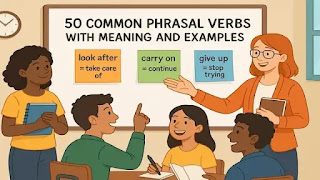
What are the 50 Phrasal Verbs with Meaning and Examples?
Image
What are the 50 Phrasal Verbs with Meaning and Examples? If you're wondering  What are the 50 Phrasal Verbs with Meaning and Examples? , you're in the right place Learning phrasal verbs is essential for mastering spoken English. Whether you're a beginner or intermediate learner, understanding how phrasal verbs work can dramatically improve your fluency and comprehension. In this comprehensive guide, you’ll learn 50 of the most useful phrasal verbs , complete with meanings, clear explanations, and real-life examples that make them easy to remember and use. What is a Phrasal Verb? A phrasal verb is made up of a regular verb followed by a preposition or adverb, and together they create a completely new meaning that’s often quite different from the original verb. “Give up” means to stop trying (not just “give”). The phrase " look after " goes beyond simply looking—it means taking care of someone or something and making sure they're okay. Why Are Phrasal Ve...

Evolution of Modern English Language

Image
Evolution of the Modern English Language The English language has gone through an incredible journey, evolving from its earliest form, Old English, into the global language we know today. This transformation spans centuries and reflects major cultural, political, and social shifts. Modern English, now spoken by millions around the world, continues to grow and change, adapting to new influences and technologies. Here’s a closer look at how English evolved, from its humble beginnings to the modern language we speak today. The Origins of English: Old English (450–1150 AD) The story of English begins with the arrival of Anglo-Saxon settlers from Germany, Denmark, and the Netherlands in the 5th century. These settlers brought their Germanic languages with them, which eventually formed what we now call Old English. The language of this time was very different from modern English, with words like "cyning" (king), "æppel" (apple), and "hūs" (house) being common. O...